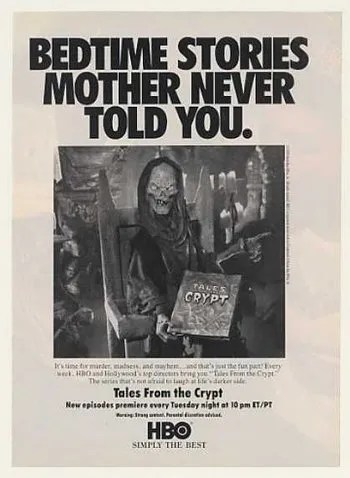
The first time I watched Tales from the Darkside was when I started subscribing to Shudder. I was flipping through the content and could not decide what I wanted to watch until I saw the name of the TV series. Tales from the Darkside. I was wondering if this is a new series. I have heard of Tales from the Crypt, but I have never heard of Tales from the Darkside?
I watched the first couple of episodes of the series, such as “I’ll Give You A Million,”
The New Man ( a personal favorite)
I was hooked and watched every single episode I could. Fast-forward to this year, and I decided to revisit the series since I last watched it a couple of years ago.
Tales from the Darkside first aired on October 29, 1983, and was created by George A. Romero. Each episode mixes horror, magic, and dark comedy. Laurel Entertainment also produced one of my favorite movies, Creepshow (which was based on the EC Horror Comic):
Wanted to do something similar to Creepshow but without the comic book elements, and thus, Tales from the Darkside was born. This show had a fantastic array of writers involved, such as Stephen King, Clive Barker (one of my favorites), John Cheever, and Robert Bloch.
(The Yattering and Jack, written by Clive Barker).
Apart from the episodes, the show’s introduction is also very creepy. The combination of the deep voice that starts speaking within 10 seconds of the music playing and the scenic background creates an undercurrent of a peaceful calm before you see the chaos and darkness of the show. I am watching the series again and enjoying it as though I am watching it for the first time.
Some interesting facts about the show:
Tales from The Darkside: The Movie was made in 1990 and was directed by John Harrison
The show had four season and ran from 1983-1988.
The pilot episode was called “Trick or Treat” and aired in October 1983.
Which is your favorite episode of Tales from the Darkside? Comment below!!
“Throughout Simone Leigh’s 2023 exhibition at the Hirshhorn Museum, several visual motifs and themes within her works kept reappearing. These themes suggested the idea of the black woman as an intertemporal sempiternal being. Leigh created several forms of the black woman that were visually monumental, almost to the point of a commemorative statue that is somewhat modernist in concept. These works visually were heavily inspired by cultural African forms such as the D’mba Headdress, or West African bust (Figure 1). One of the main themes displayed in the exhibition was the idea of the black woman as a nurturing and intellectual vessel or an architectural being through a skeuomorphic lens, with other objects to support this idea. The exhibit had a contemplative atmosphere that helped produce a meditative frame of mind while viewing the works. Many of the works instead of being close to each other, or in a sequential row to be viewed, were instead spaced out, often occupying their own sections of the rooms placed in. This spacing helped give the viewer time to deeply think on what lay in front of them without being overwhelmed, or uninterested because the work in front of them was substantial enough to view on its own (Figure 2).
Screenshot
The placement of lighting within the exhibit also greatly accentuated the colors and primary features within the works. It helped add to the harmony of the spacing of all the pieces displayed. Leigh presented African sculpture inspired Afrocentric depictions of black women as shelter-like objects, or symbols to be engulfed in or protected by.
Screenshot
The first piece featured in the beginning of the exhibit titled Cupboard (Figure 3) emulated a voluminous women’s dress. It was massive in stature with a chalk white cowrie shell, a common motif in Leigh’s work, on the top and light brown raffia palms ballooning from below the shell. The physical structure of the sculpture created an image that resembled a shell sitting upon a bell shaped haystack, or even a head peeking out of one.
According to the work’s plaque description (Figure 4),
Leigh “pointed to the 1931 Paris Colonial Exposition, which established the hut within a colonial iconography” when creating this piece. Within this exposition, France mounted the hut along with other significant cultural items from different colonized countries to display the vast expanse of cultures France’s imperialism had reached and was then in control of as a form of shared culture immersion and assimilation. In the context of this work by Leigh, she utilized the imagery of the hut to create a sense of “gathering places or dwellings” according to Figure 3. The work signifies a divine energy, which the cowrie shell is often representative of, while also giving a sense of shelter for one to reside in, like a cupboard for a small child or a hut for communal gathering.
The series of three bronze works in the third room of the exhibit titled Vessel (Figure 5), Bisi (Figure 6), and Herm (Figure 7), all continued the idea of the black woman as a structural being.
Screenshot
All three had a structured architectural elements to them, with Vessel having an Afrocentric asphalt black eyeless female figure with a permed hairstyle similar to that of a stereotypical 1960s housewife, and an exaggeratedly elongated concave torso standing on one right foot. Bisi featured another eyeless female figure in asphalt black, but as an armless bust, cut off at the shoulder with close cut hair. The half below the torso of this work had a semi cylinder shaped like a skirt that is said to be able to enclose “Leigh’s own body” (Hampton, 2023) within it. The last work featured in this series Herm (Figure 7) displays another figure asphalt black female figure, eyeless as well, with their armless torso attached to a pedestal, a small almost scar like slit in the middle, and one slightly bent leg perched out behind them. Of all the three Bisi was the most visually striking of them all however, and resonated with the concept of the black woman as a shelter. The structure of the skirt was built wide and long enough to shelter over a small human being, as if being engulfed in one’s womb. Through this exhibit the idea of intertemporality within art and overall the black woman, and how a modernist view of certain cultural views in art can be translated in a contemporary way was expressed. The architectural formatting of the works evoked a sense of meditation on how in the outside world the black woman should be perceived by those who are not, and highlighted the structural imagery of the essence of a black woman.”
If you would like to learn more about Ambe. Here is the following social media information:
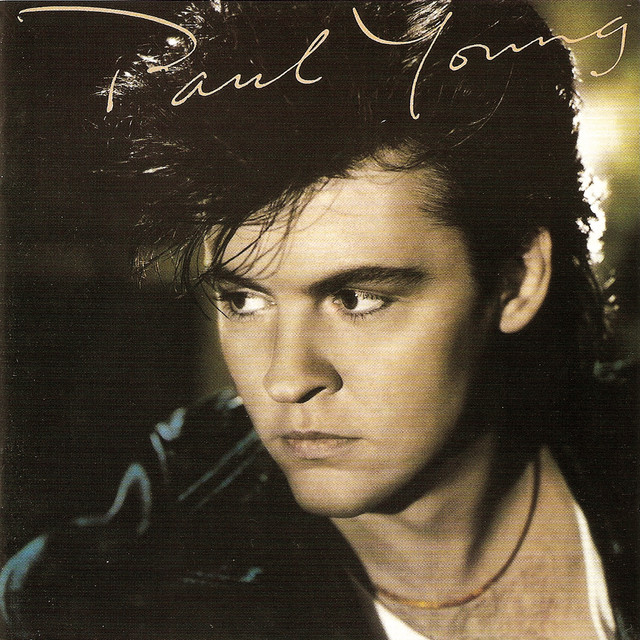
The song “Everytime You Go Away” first attracted my attention as a kid. I absorbed everything on MTV for many years by watching every music video and show. The version of this song I heard was sung by Paul Young. It was the middle of the night, and the beginning intro to this song caught my attention. It felt breezy, like someone was about to open their heart and let you inside, only to have the wind carry you back out when the song ended.
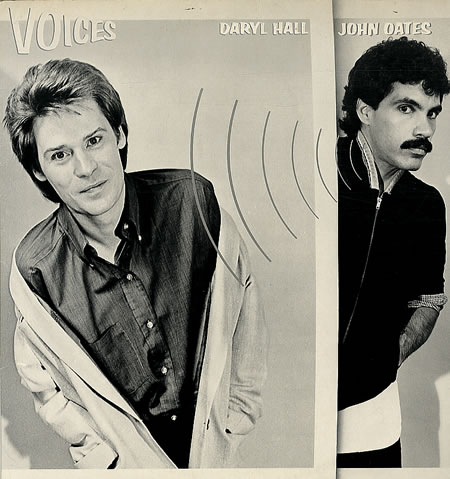
What I did not know about this song was that Paul Young sang a cover version in 1985, and the original song was written and made by Daryl Hall. Yes, Daryl Hall from Hall Oates:
This song was on Hall and Oates’s “Voices” album, which came out in 1980. Although both versions have different vibes and feel in their melodies, I fell in love with Paul Young’s version.
“Everytime You Go Away” appeared on Young’s The Secret of Association album, released in 1985. It was one of his well-known songs, and he even sang a duet with George Michael at Live Aid in Wembley Stadium in 1985.
At its peak, the song hit number 4 on the UK Singles Chart in March 1985. The song reached number one on the Billboard Hot 100. The song also won British Video of the Year in 1986 at the Brit Awards. This song is constantly on my music playlist, mainly because it holds memories for me, or maybe it’s just a darn good song.








 ladycultblog